What to wear for a cold Atacama stargazing night
The desert gives back its daytime heat fast once the sun goes down, and a stargazing tour means standing still for a couple of hours. Dress for a ski lift rather than a beach evening. The tours lend blankets or ponchos, but those go on top of your own layers, not instead of them.
Why a desert night feels this cold
Dry air holds very little heat, so the warmth of a sunny afternoon escapes straight into a cloudless sky after dark. At about 2,400 m (7,900 ft), San Pedro de Atacama sits high enough to make that drop feel sharper.
From June to August the open desert is often around or below freezing, 0 °C (32 °F), during a tour. Summer nights from December to February are milder but still cool, and a breeze across open ground makes either feel colder.
The third factor is you. On a stargazing night you walk a few steps between telescopes, then stand and look up, and a body that is not moving cools down quickly.
Dress in layers, from the skin out
Start with a thermal base layer top and bottom, ideally wool or a synthetic fabric rather than cotton. Over that goes a fleece or a thick sweater, then a down or insulated jacket.
A thin windproof shell on top stops the breeze from stealing the warmth of everything underneath. On the coldest nights, insulated trousers or a second pair of leggings over the base layer make a big difference.
Layers also solve the car problem. Tours with hotel pickup spend some time in a warm vehicle, so you can open a jacket on the drive and close everything once you step out under the sky.
The packing list
- Thermal base layer, top and bottom
- Fleece or thick wool sweater
- Down or insulated jacket with a hood
- Windproof shell
- Long trousers, insulated in winter
- Warm hat that covers your ears
- Gloves, ideally thin ones you can work a phone in plus a warmer pair
- Scarf or neck gaiter
- Thick socks and closed shoes with a firm sole
- Small headlamp or flashlight with a red setting
- Lip balm and a bottle of water
Leave sandals and light sneakers at the hotel. The ground at the viewing sites is dirt and gravel, cold creeps up through thin soles, and you will be on your feet for most of the night.
What each tour lends you, and what it asks
Every tour on this site serves hot drinks and has something to wrap around you, but the details differ. The listings also say what to bring, and they agree on warm clothes.
| Tour | Lent or served | The listing asks you to bring |
|---|---|---|
| The Roofless AI | Thermal blankets, hot chocolate or decaf tea | Warm clothes (check the listing) |
| Llama Stargazing | Blankets, tea, coffee, hot chocolate | Warm clothing, comfortable shoes, a jacket |
| A Night with the Stars | Blankets, an outdoor heater in the cold season, hot spiced wine | Closed-toe warm shoes, gloves |
| Owner Experience | Hot chocolate in the tasting | Warm clothing and water |
| Observatorio Licanatay | A poncho, coffee or tea | Thermal clothing, a windbreaker, binoculars |
A blanket over your knees helps while you sit and listen, but it does little once you stand at an eyepiece. The heater on A Night with the Stars from ~$46 is a welcome extra in winter, not a reason to pack less.
Collected from your door on a cold night
Owner Experience picks you up at your hotel and drops you back, so you skip the dark walk to a meeting point. Its 3-hour night includes hot chocolate, wine and a cheese and cold cuts tasting.
Hands, feet and head
Fingers go first. You will hold a warm cup, then a phone, then the edge of a telescope, so two pairs of gloves beat one thick pair that you keep pulling off.
Cold feet end more stargazing nights early than anything else. Thick socks inside shoes with a solid sole keep you on the gravel longer, and a spare dry pair in a bag costs nothing to carry.
A hat that covers your ears matters more than people expect, since you spend the night with your head tilted back toward the sky. A scarf or neck gaiter closes the gap at the collar.
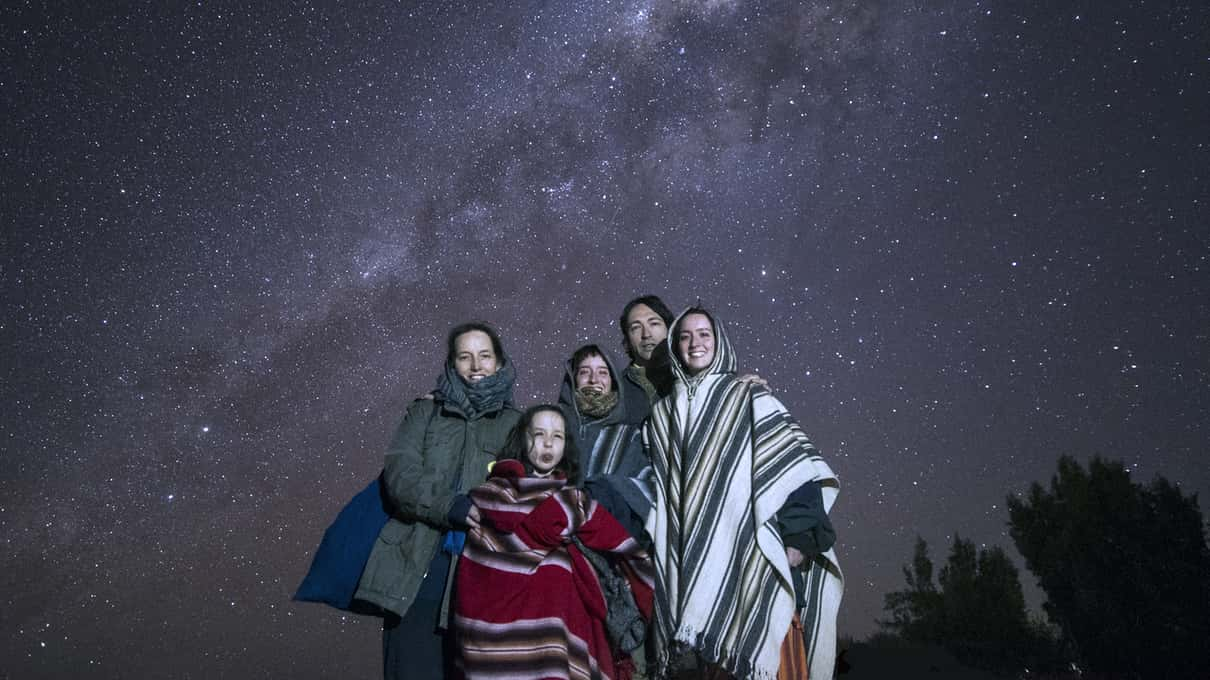
How the tours differ on comfort
A longer night means more time in the cold. The Owner Experience tour from ~$50 runs 3 hours, while most others run about 2 hours 30 minutes plus the drive.
How you get there matters too. On Llama Stargazing from ~$33 you walk to a meeting point in town and wait outside, while the Roofless AI tour from ~$70 collects you from your accommodation. Our pickup guide compares every tour on this.
Small things that make the night easier
The air is very dry, so carry water and lip balm even on a cold night. Hot drinks on the tour help, but the wine and pisco sour on offer will not warm you up at altitude.
A small light with a red setting lets you find your footing without ruining your own night vision or anyone else's. Skip white phone screens at full brightness for the same reason.
If you plan to take pictures, cold drains phone batteries fast, so keep yours in an inside pocket between shots. Our guide to stargazing photos covers the rest of the camera side.
Dressing for the season
From June to August, bring everything on the list and wear most of it. Children lose heat faster than adults, which our guide to stargazing with kids takes into account.
From December to February you can drop the insulated trousers and maybe the second sweater, but keep the jacket, hat and closed shoes. Our guide to the best months shows how the cold and the clear nights trade off through the year.